View Point
Research
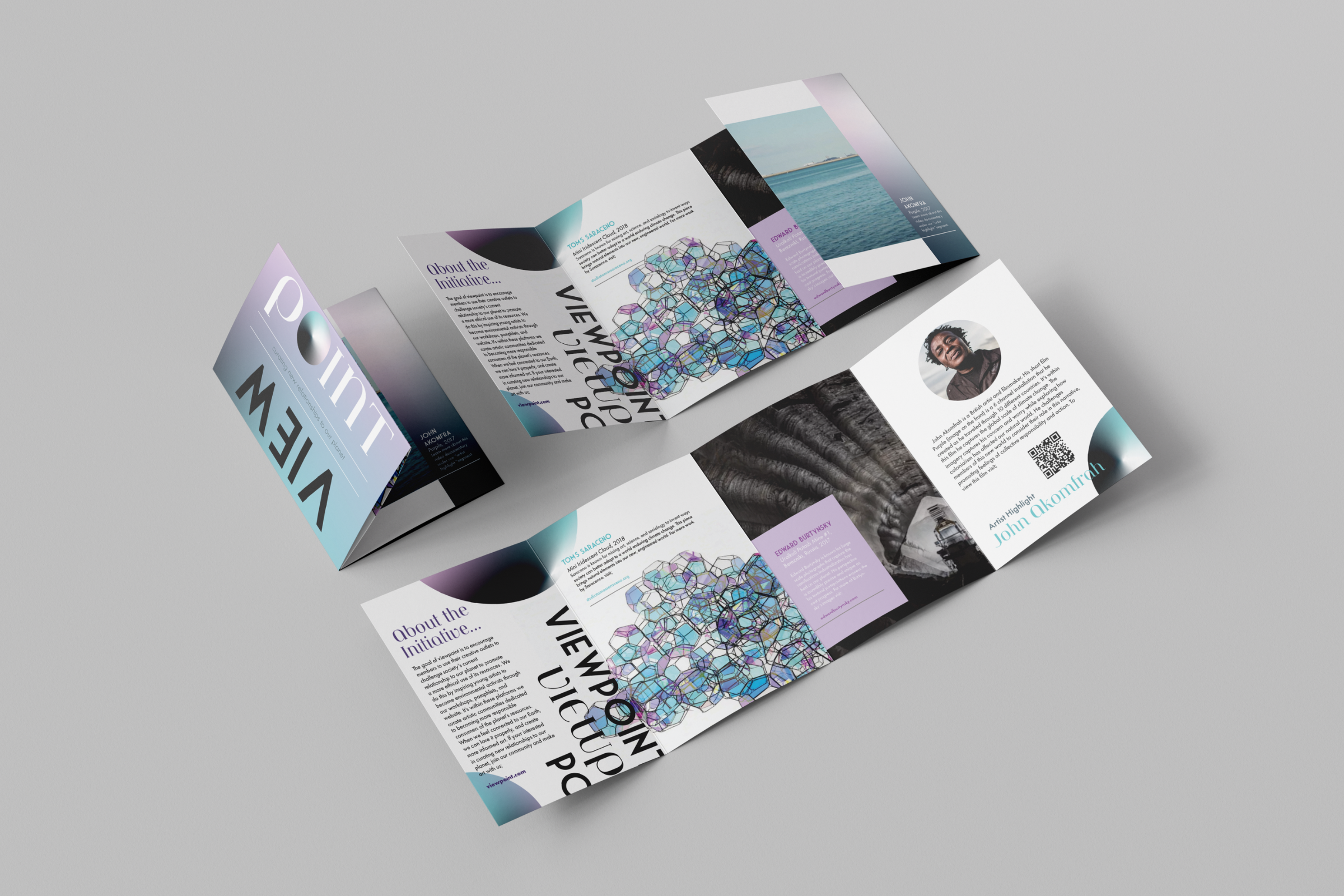
Designing View Point required a careful balance of aesthetic sophistication and grassroots accessibility, ensuring that the pamphlet not only informed but also invited engagement. Created for a fictional grassroots organization, View Point sought to unite and amplify the voices of artists deeply invested in environmental issues. More than a call to action, this initiative aimed to build community, foster dialogue, and encourage artists of all mediums to explore sustainable practices in their work. The pamphlet became the primary touchpoint for the movement, serving as both a visually compelling publication and an invitation to community events centered on environmental art.
Prototype
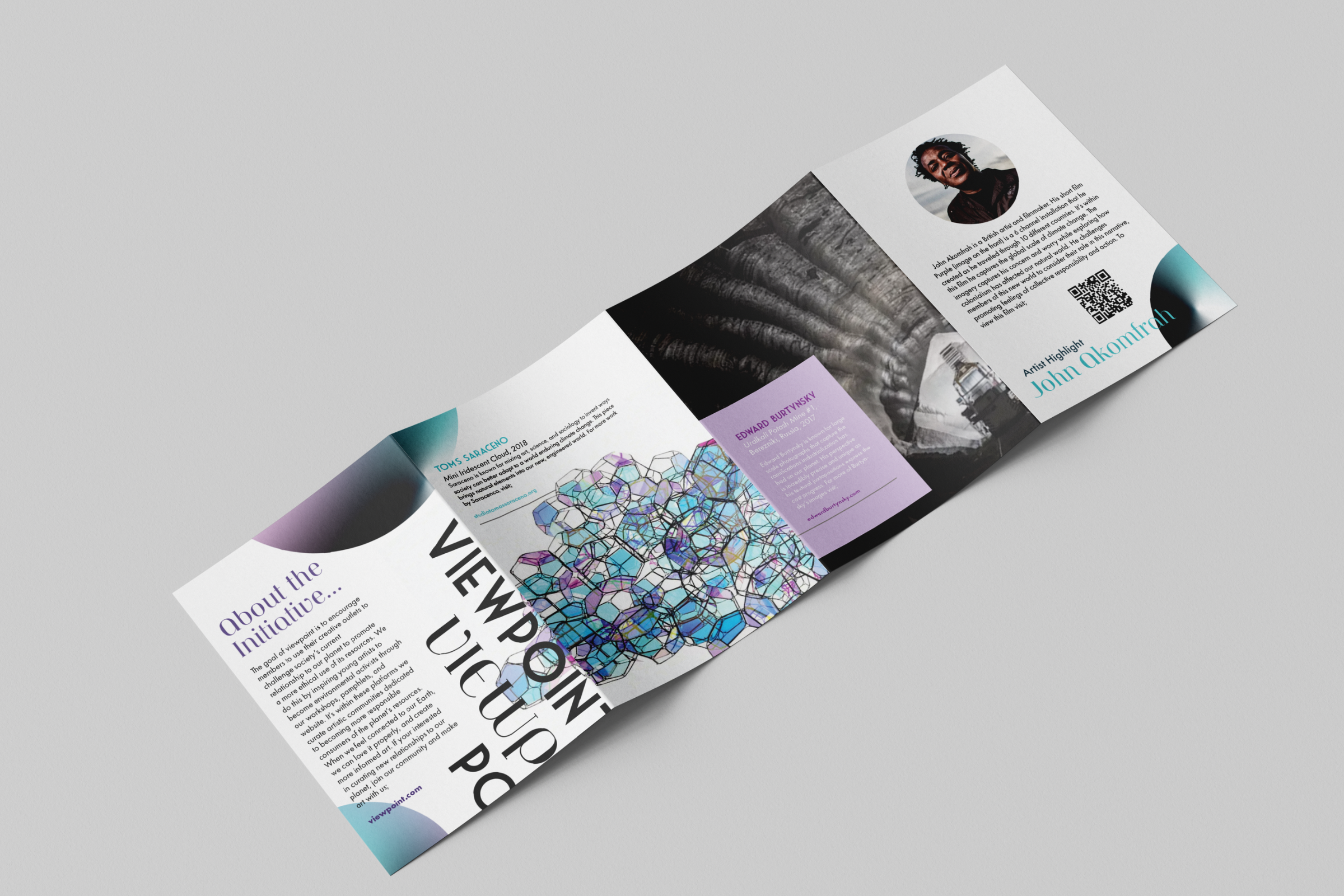
The design process revolved around creating a gate-fold layout, ensuring that the conjoined pages could feature one of Akomfrah’s most well-known pieces at full scale. This decision elevated the visual impact of the pamphlet, transforming it from a standard informational leaflet into an immersive art experience. Branding elements were intentionally soft and thoughtful, with a palette of lilacs and blues chosen to evoke calm, contemplation, and an inviting atmosphere. Unlike movements that rely on urgency or alarm, View Point’s goal was to encourage slow, meaningful exploration—a sentiment reflected in both color psychology and layout choices.
Solution
Typography played an essential role in achieving both accessibility and sophistication. A modern, clean typeface was selected to maintain a high-end appearance while ensuring readability for a diverse audience. The balance of white space and structured content guided readers through the mission, featured artist, and upcoming events, making the pamphlet both informative and visually engaging.
Results
The final product was a harmonious blend of editorial design and advocacy, successfully capturing the ethos of View Point. Every element—from the artist spotlight to the folded reveal of Akomfrah’s work—was designed to immerse readers in a world where art and environmental consciousness coexist. More than just a promotional piece, this pamphlet became a tool for connection, encouraging artists to gather, reflect, and redefine their role within the environmental movement. By prioritizing aesthetic refinement, inclusivity, and thematic cohesion, View Point set a new standard for how grassroots initiatives can leverage design to inspire lasting change.